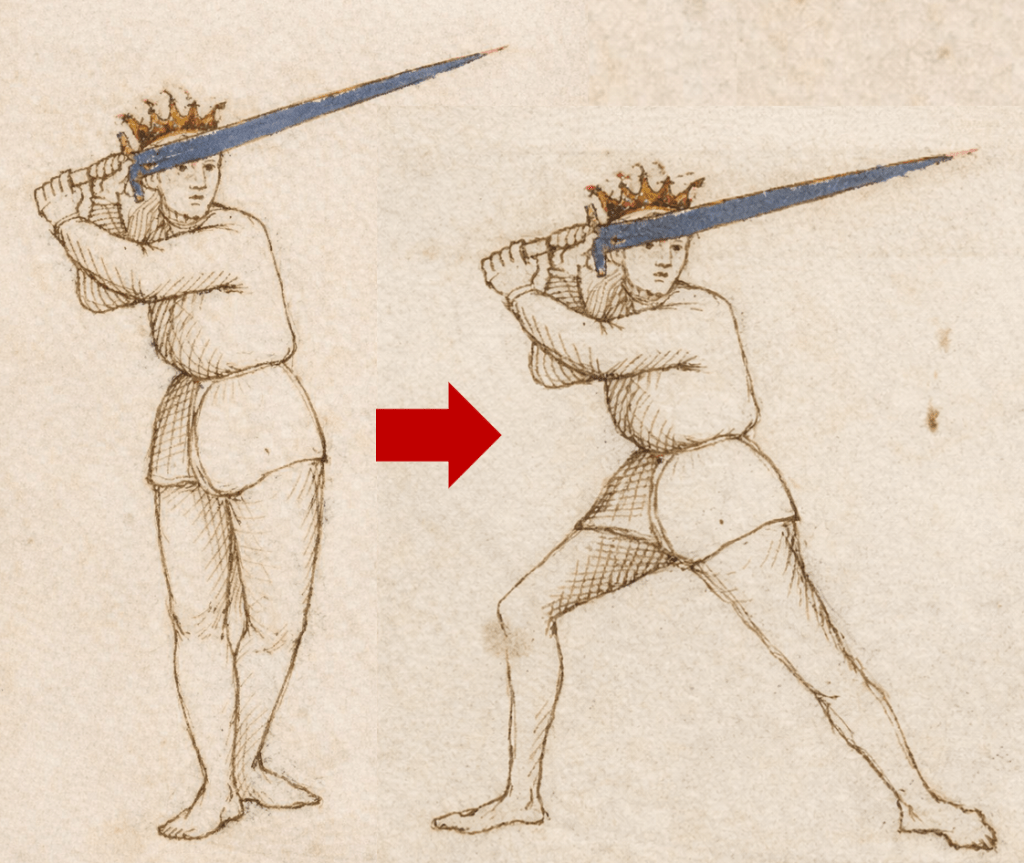
One of the things that I really like about many late 16th / early 17th century fencing sources is that they spend a lot of time discussing how to approach your opponent as securely as possible and do so in a clear and methodical way. By contrast, the 15th century longsword sources I am familiar with (Fiore, Vadi, and MS 3227a of the Liechtenauer tradition) offer very general advice about the approach which often leaves a lot up to interpretation.
I put together the attached slideshow/handout outlining a hypothesis I’ve been playing with for a bit more than a year now based on the 1606 work of Salvator Fabris and the works of various modern historical fencing instructors. I call this hypothesis speculative because (as far as I’m aware) there is no explicit evidence that the sort of footwork Fabris describes was used the same way in earlier longsword fencing. I’ve had some success applying this approach in free fencing with the longsword, but more experimentation is needed.
I might flesh out this presentation in the future when I have more time (or as I gain more insights). In the meantime, I hope you find it interesting!
 Blume des Kampfes
Leave a comment