Category: Einhändiges Schwert / single-handed sword
-
Wie bereitet man sich auf ein Duell vor, wenn man keine Zeit hat?
Ich durfte diese Woche auf der Arbeit einen fünf-minütigen Vortrag über ein nicht zwingend arbeitsbezogenes Thema halten. Ich habe natürlich diese Gelegenheit genutzt, um ein Thema anzusprechen, für das heute zweifelsohne 90% der Bevölkerung in allen entwickelten Ländern interessieren: Wie bereitet man sich auf ein Duell mit Schwertern vor, wenn man wenig Zeit und null…
-
A Speculative Hypothesis: Applying Fabris to Longsword
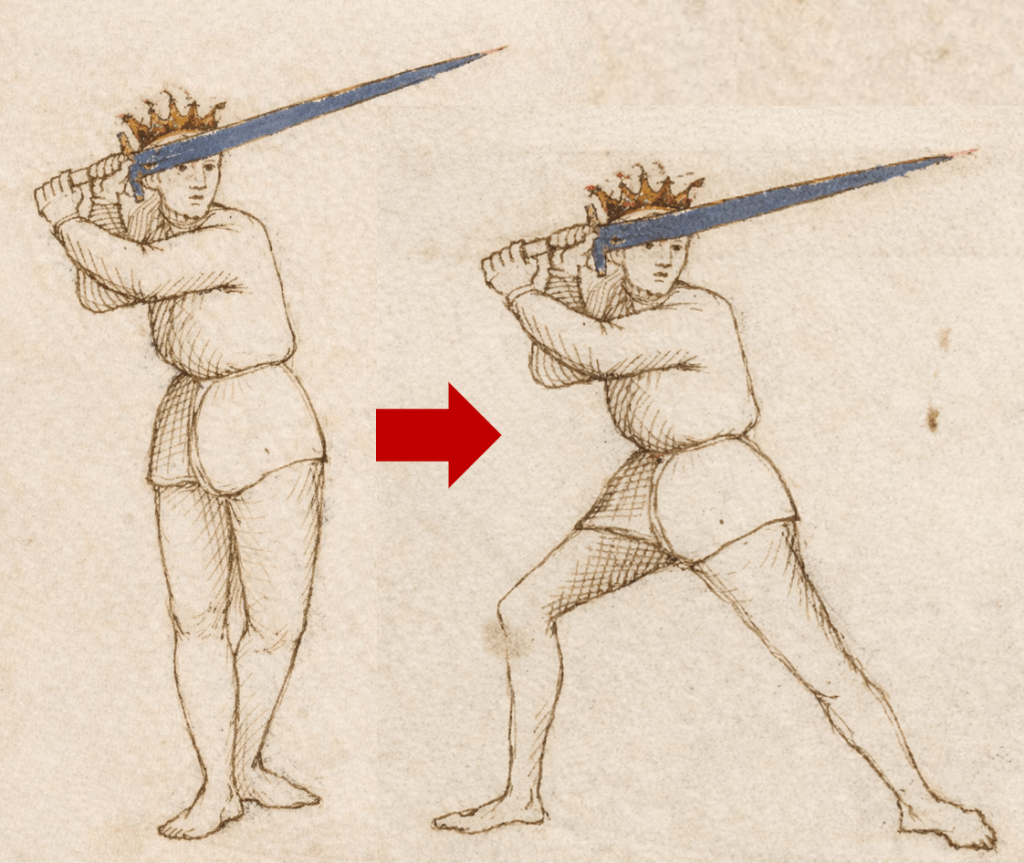
One of the things that I really like about many late 16th / early 17th century fencing sources is that they spend a lot of time discussing how to approach your opponent as securely as possible and do so in a clear and methodical way. By contrast, the 15th century longsword sources I am familiar…
-
Charles Besnard “The Free Master of Arms” Overview
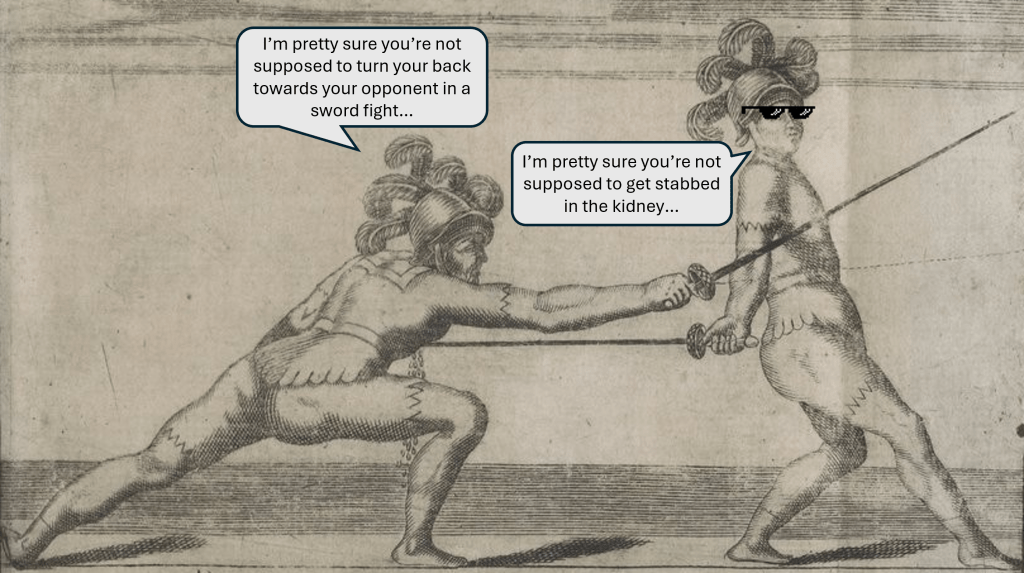
This is intended to be a “too long; didn’t read” summary of Charles Besnard’s 1653 fencing treatise Le maistre d’arme liberal based on my reading of the English translation by Anne Chauvat and Rob Runacres available here. This summary necessarily involves interpretation on my part, but I’ve tried to strike a good balance between brevity…
-
Snazzy Smallswords
In this post, I simply want to share a selection of smallswords I like! For now, it only includes smallswords from the Metropolitan Museum of Art‘s collection. I might expand this post to include examples from other museums in the future. What is a smallsword? Smallswords, also known as court swords, are a category of…
-
Fabris Overview
This is intended to be a “too long; didn’t read” of my chapter-by-chapter summary of Fabris’s Book 1 here. This summary necessarily involves a bit of interpretation on my part, but I’ve tried to keep that minimal. I’m new to Fabris and am open to corrections and feedback! Can you give me the “TL;DR” for…
-
Fabris Notes by Chapter

Who is Fabris? Salvator Fabris was an Italian fencing master who lived from 1544-1618. He wrote a fencing treatise called De lo Schermo, overo Scienza d’Arme (“On Defense, or the Science of Arms”). It was written in the 1590s, published in 1606, and is regarded as one of the most influential fencing treatises of all…
-
Reblog: Risiken und Belohnungen | Risks and Rewards

Deutsch: Ich empfehle den hier verlinkten Blogpost „Risks and Rewards“ von Vincent. Jeder, der sich schon eine Weile mit dem historischem Fechten beschäftigt, hat schon einmal so einen Spruch gehört: „Das würdest du nicht tun, wenn dein Gegner ein scharfes Schwert hätte!“ oder „Das würdest du nicht tun, wenn du keine Fechtmaske aufhättest!“. Diese Klischees…
-
Best Sword™
In another post I shared some thoughts about various attributes of sword design. Basically, different kinds of sword exist because no sword is optimized for all contexts and different people want different things out of a sword. In this light-hearted post, I share some of my favorite “best” swords. Why the longsword is the best…
-
Harte und weiche Faktoren

You can find an English version of this post here. Ob es sich nun um ein Schwert, ein Flugzeug oder eine Waschmaschine handelt, kann man die Eigenschaften eines Objekts in „harte“ und „weiche“ Faktoren unterteilen. Diese beiden Kategorien existieren, um hervorzuheben, wie unterschiedliche Eigenschaften zur Leistung des Dinges beitragen. Was sind harte und weiche Faktoren? Harte…
-
Hard and Soft Factors

Eine deutsche Version dieses Beitrags findest du hier. Whether discussing a sword, an airplane, or a washing machine, the traits of that thing can be divided into “hard” and “soft” factors. These two categories exist to differentiate between different kinds of characteristics that affect performance. What are hard and soft factors? Hard factors are traits that…

